Gardens
The story so far…
Our church gardens are a quiet but powerful witness to faith in action—spaces where heritage, nature, and community meet. They remind us that caring for creation is an ongoing act of worship, rooted in gratitude and hope. As these gardens continue to grow and evolve, they offer not only beauty and biodiversity, but also a living expression of our shared commitment to stewardship, sustainability, and the flourishing of all God’s creation.
Rooted in centuries of tradition, they provide places for reflection, prayer, and connection with God’s creation, while also offering vital habitats for wildlife in increasingly urban and developed environments. Within the framework of the “A Rocha” Eco Church scheme, our church gardens play an important role in demonstrating care for the environment and a commitment to sustainability. They support biodiversity through planting schemes that attract pollinators, birds, and beneficial insects, and they encourage practices such as composting, recycling, and reducing carbon impact through thoughtful planting choices. These gardens also serve as educational and inspirational spaces, showing how heritage, ecology, and faith can work together. In caring for the land around our churches, we are reminded of our responsibility to “tend and keep” creation, ensuring that these sacred spaces continue to flourish for future generations.
There are two gardens we are working with; Kate’s Garden and the Vestry Garden.
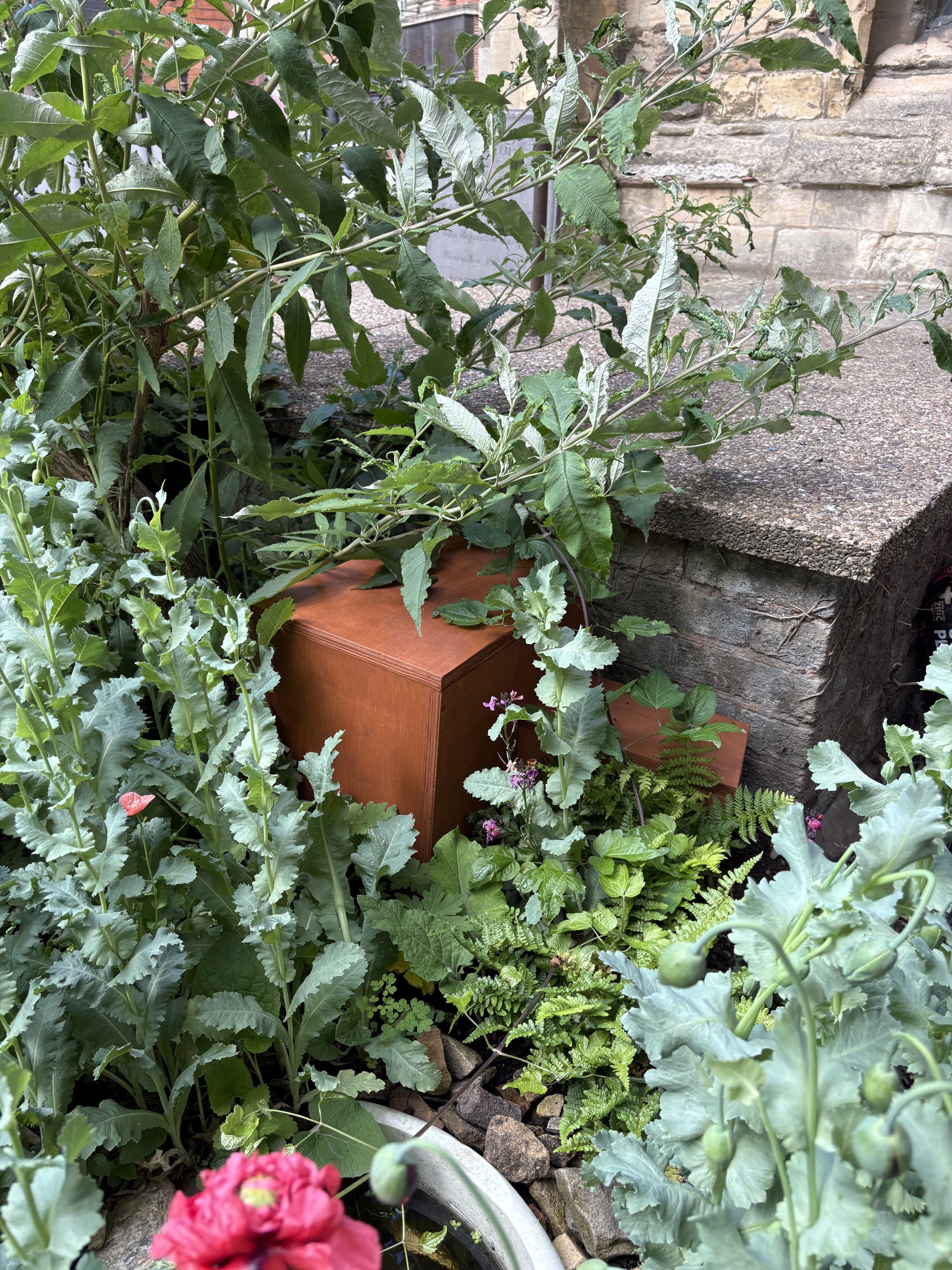
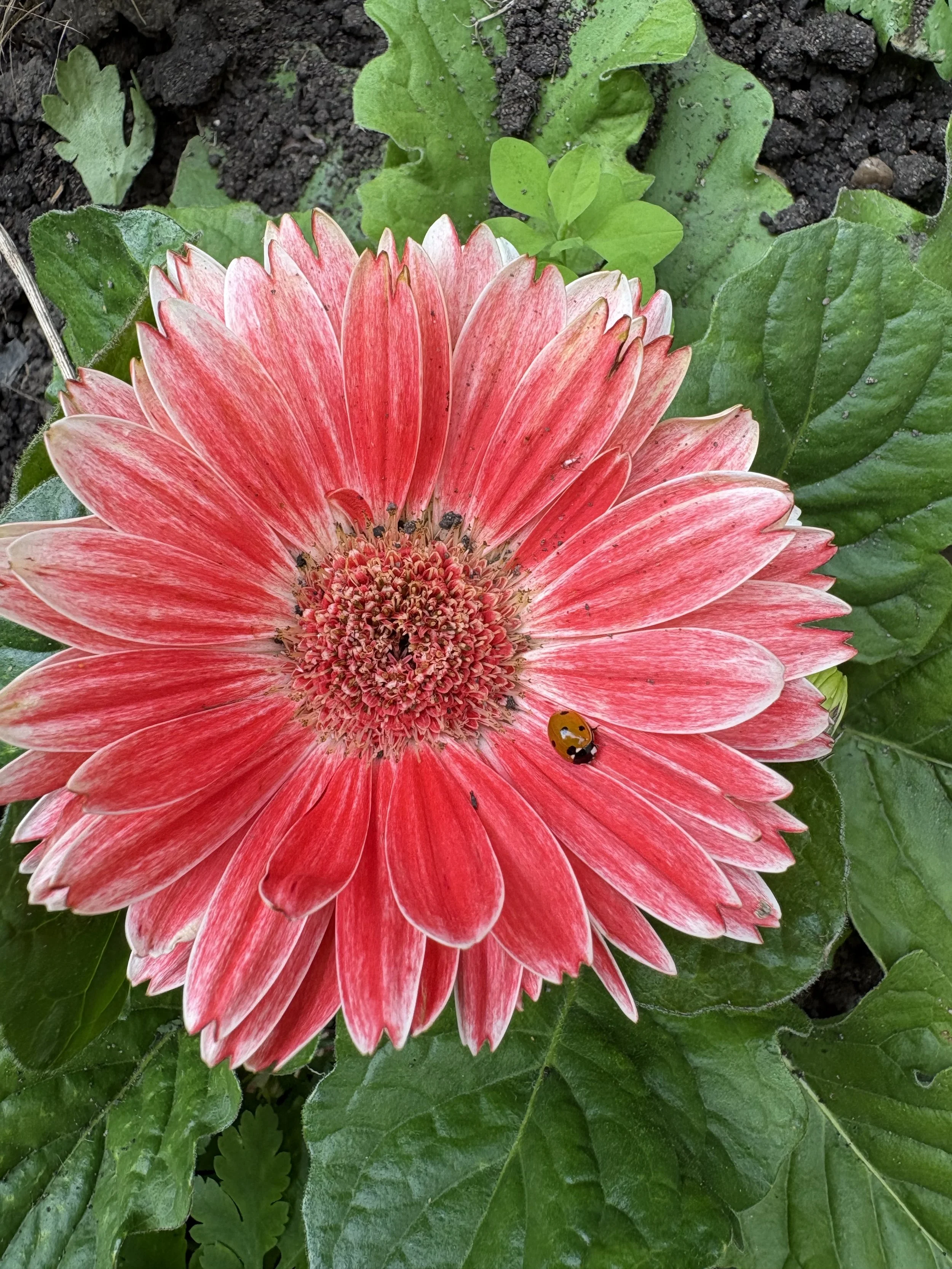
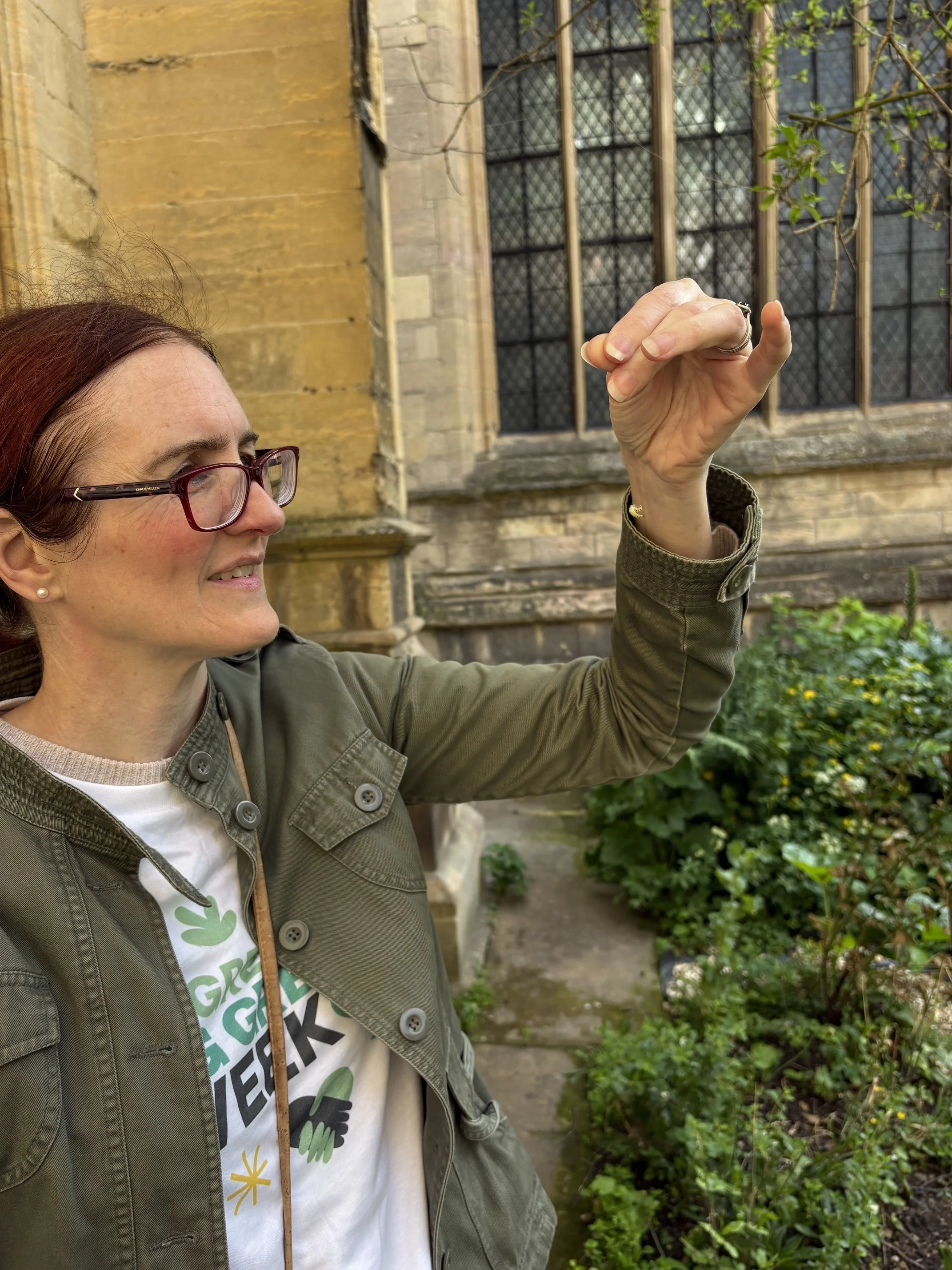
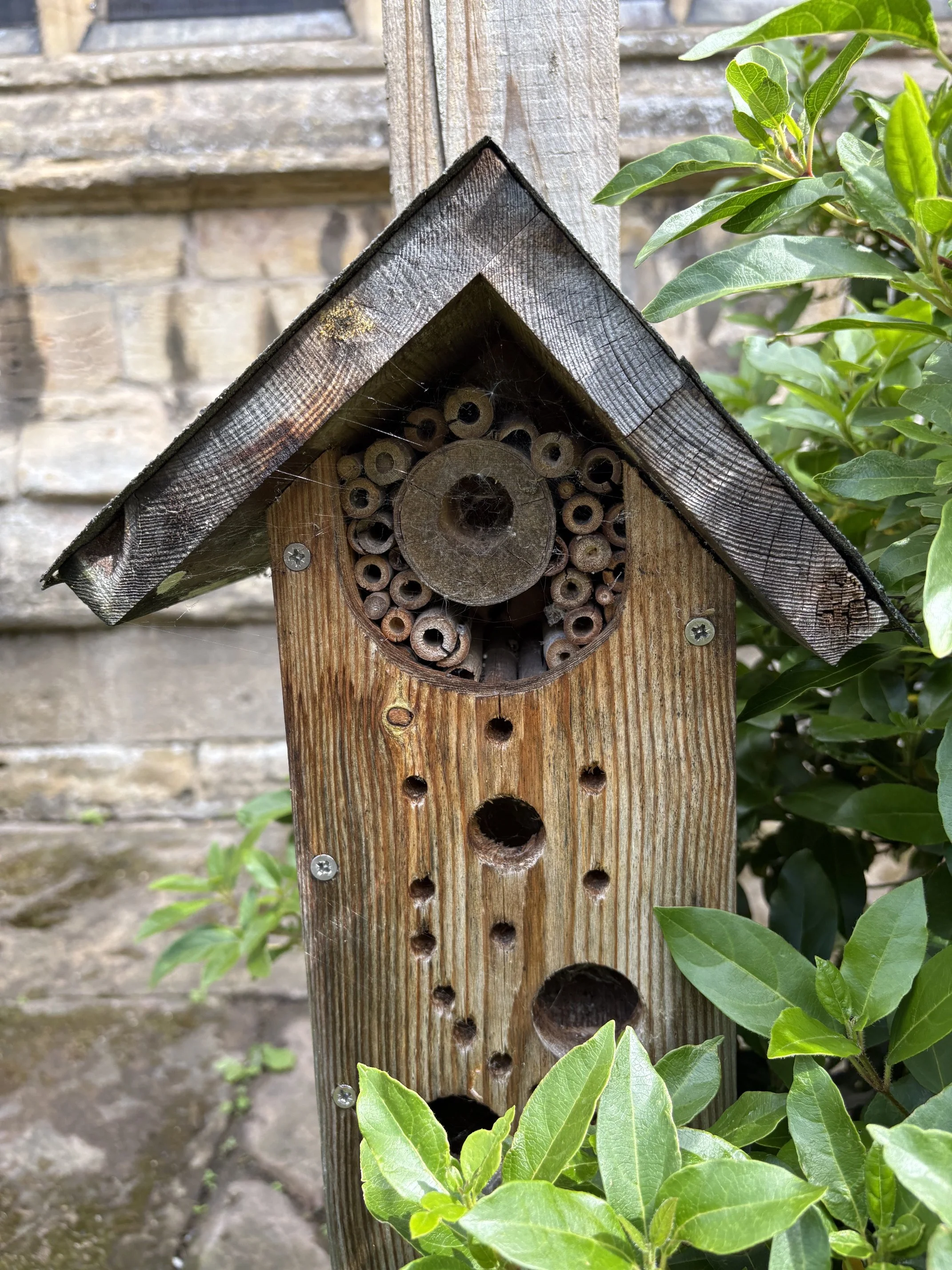
Kate Koppana, who looked after the garden for many years, did a fabulous job of introducing historically relevant plants and herbs. Due to the scaffolding and work carried out on the church both gardens have suffered over the last 14 months. Some plants (like the Bears Breeches) have gone ‘underground’ and sprouted up everywhere. We literally pulled out about 40 ‘babies’ and have given those to various community gardening groups in and around Newark. Our plan for Kate’s Garden, is “Gardening for God” with a continued historically influenced planting of herbs, flowering plants etc, that have been used for centuries for Culinary, Medicinal, Dyers etc. and in the Vestry Garden the theme is a “Grown not Flown” garden for the use for the Flower Team within the Church to help reduce our carbon footprint for flowers and foliage throughout the year. Also introduced are bug hotels, a compost bin, and birdbath together with a small pond made from a repurposed washing up bowl to encourage insects, amphibians etc. into our garden. In fact, Kay spotted our first butterfly of the season on a warm spring-like day recently….a Brimstone (ie bright yellow).
Both gardens are maintained by volunteers from the Church and Historic Newark in Bloom - and we are always looking for additional help as we are now working on the planters around the church also.
St Mary’s Gardens Booklet
We now have a new Gardens Booklet which is available from St Mary’s. It tells you all about the ongoing work on our gardens, how the flowers and plants impact our worship, and the dedication of our small but eager gardening team.
Flowers in Church
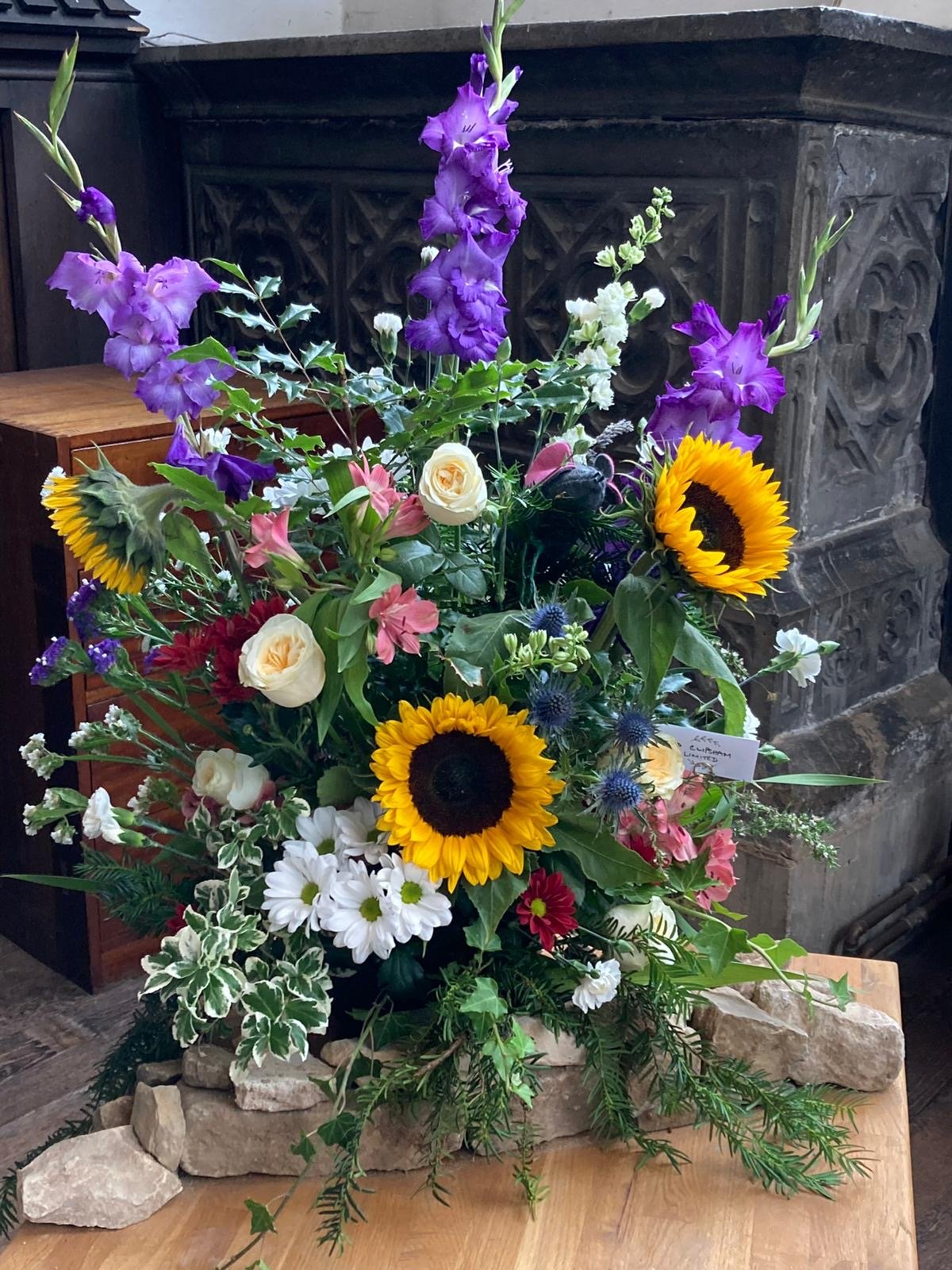
Flowers have long played an important part in the life and worship of our church. They bring colour and beauty and signs of the changing seasons into our sacred spaces.
From festivals such as Easter and Christmas to quiet ordinary Sundays, floral displays help to mark the rhythm of the Christian year.
At St Mary’s we are grateful for our dedicated flower team, whose skill, creativity and generosity, help make the church welcoming throughout the year. Arrangements not only enhance services and celebrations but also continue a long tradition of using flowers to express joy, remembrance, hope and thanksgiving.
The work of the flower team beautifully complements the growing care for nature within the church gardens, using flowers and greenery wherever possible from our outdoor spaces, connecting worship inside the church with the living landscape beyond its walls.
“Kate’s Garden - Gardening for God”
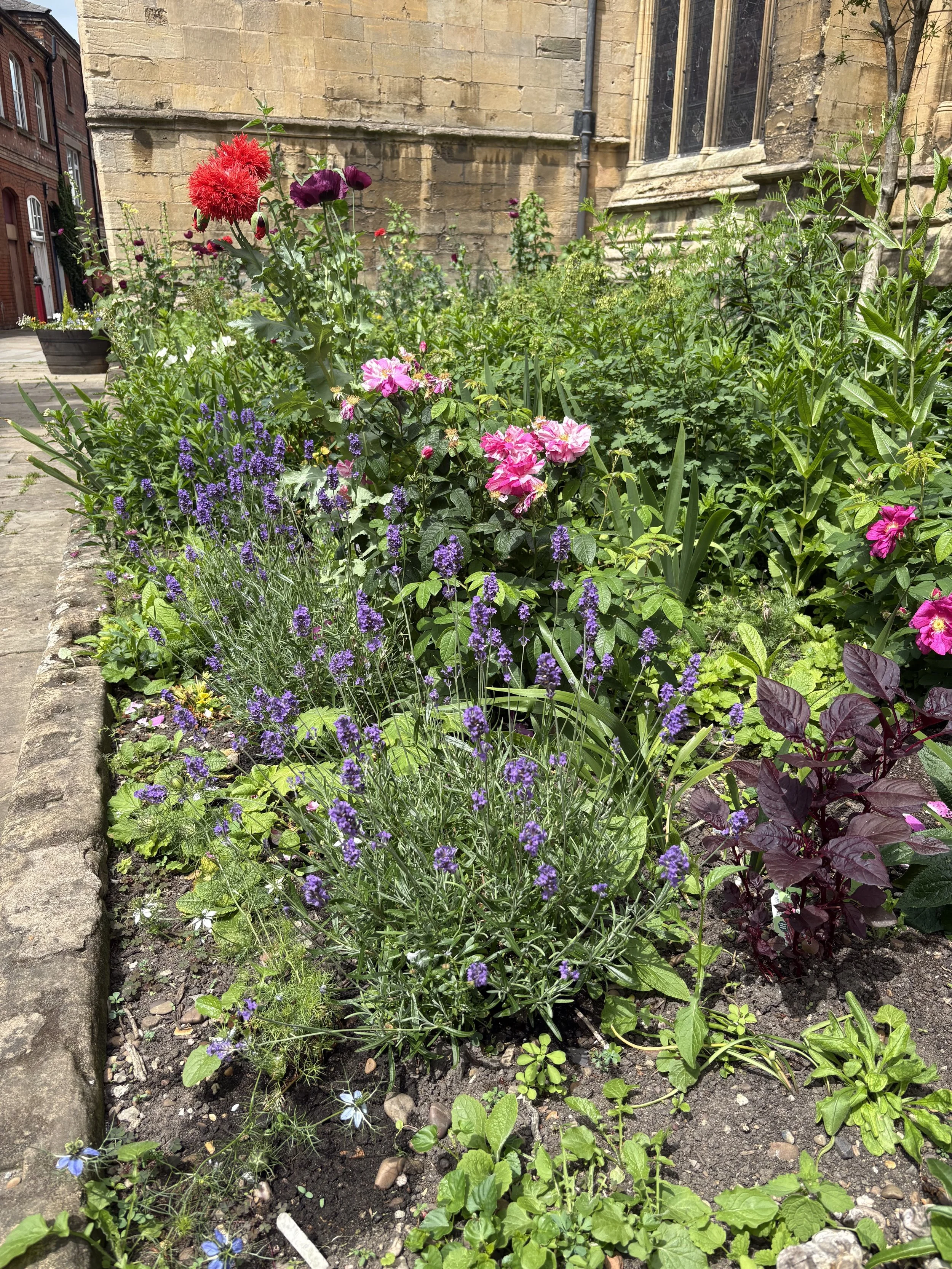
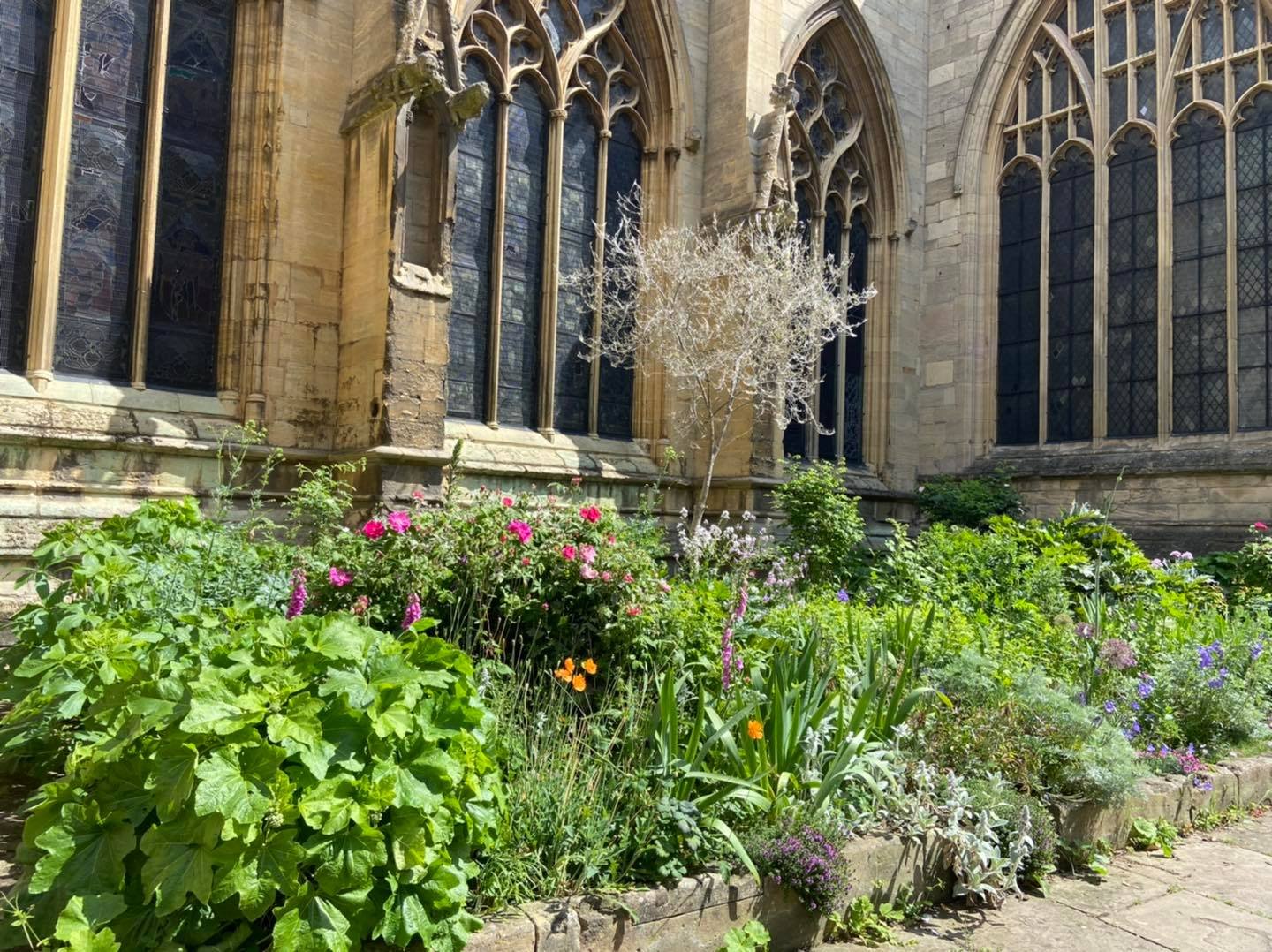
The focus here is to maintain and continue the work of Kate Koppana and focus on herbs/plants and flowers that have a significant history of Newark and the church, that even dates to medieval times (some even Roman), there will be plants that are familiar to you and some maybe new. We are in the process of labelling them as they resurface post scaffolding!..By achieving the historical garden one can imagine walking in our ancestors medieval footsteps and in turn remember the generations of pilgrims who have visited this site over the last 900+ years.
All the flowers and plants have a symbolic meaning; which could include strewing herbs for use in the church, dyers plants for use in textile dyes, culinary an/ or medicinal use.
The garden is a continual work in progress but here are are some of the plants in the “Kate’s Garden” which you may find (a few of these are currently on our wish-list to be planted over the next two years which we have taken direction from the gardens around Lichfield Cathedral and other apothecary-style gardens):
Here are the plants we have either planted or identified so far (so this list may be added to in the future). Please do not ingest any of these as well as plants that can be poisonous in large quantities, we do have pigeons and their excrement can be toxic.
ANGELICA (Angelica archangelica) In medieval times, angelica was named the ‘angelic herb’ as it was believed to protect against evil and cure all ills.
BETONY (Stachys officinalis) This was considered to be very valuable in medieval times- and it was used to treat more than 47 ailments!
BORAGE (Borago officinalis) Credited with lightening the heart as well as the taste buds, it is still used in drinks today (such as Pimms) and also in very beneficial for composting CAMPANULA (Campanula persicifolia) Also known as Bell Flower. Pilgrims carried bells as they travelled along narrow country roads and bought badges, sometimes in the form of a pilgrim handbell, when they finally arrived. It was previously known as “Throatwort” as historically it was used to treat sore throats. CHAMOMILE (Chamaemelum nobile) One of the Anglo-Saxon 9 sacred herbs (Mugwort, Plantain, Lamb's Cress, Betony, Chamomile, Nettle, Crab Apple, Chervil, and Fennel), it has been valued ever since for calming and healing both mind and body.
CHRISTMAS ROSE (Helleborus niger) a few varieties are planted near the gravel path. This is said to have bloomed on Christmas Day to honour the birth of Jesus..
COLUMBINE (Aquilegia vulgaris) In Christian art, the sorrows of Mary were reflected in purple flowers, especially Columbines. In Medieval times they were considered to ward off evil. DAISY (Bellis perennis) Symbolic of purity and simplicity. They were used by Roman soldiers and throughout the Middle Ages to treat wounds, bruises, and sprains.
ELECAMPANE (Inula helenium) It has been valued as a medicine since the time of Hippocrates and is still can be found on old monastic sites.
FENNEL (Foeniculum vulgare) The twelfth-century abbess Hildegard von Bingen described fennel as ‘beneficial for anybody, whether healthy or ill…it makes a person happy and makes his digestion good.’
GOLDENROD (Solidago virgaurea) Solidago is derived from the Latin word ‘solido’, to join or make whole, a reference to the many healing properties of the plant and has been used for many years.
HEARTSEASE (Viola tricolor) Known as Herb Trinity because of its white, yellow and purple colouring (planted near the gravel path)
HYSSOP (Hyssopus officinalis) In the Old Testament, it is a symbol of purity and forgiveness’. In the Middle Ages, it was a valuable strewing herb and was used to cleanse the houses of sick people.
IRIS (Iris versicolor) They are often associated with the Passion of Christ and the Resurrection. LADY’S MANTLE (Alchemilla mollis) ‘Our Lady’s Mantle’. Due to its leaf shape,it was associated with the Virgin Mary in later European Christian folklore and was used for wound healing amongst other uses.
LAVENDER (Lavandula augustifolia) It was the Romans who first introduced this plant to Britain and from then on monks cultivated it in their monastic gardens to heal burns and strings and aid relaxation with its fragrance. It was often used in wedding bouquets, especially in Victorian times.
LEMON BALM (Melissa officinalis) Used as a tonic for melancholy and stress - and bee-friendly. The leaves also contain balsamic oils which make excellent antiseptic dressings.
LUNGWORT (Pulmonaria officinalis) According to the medieval ‘doctrine of signatures’, the spotted leaves were thought to represent diseased lungs and were used to heal chest complaints. They were also called ‘Mary’s tears’.
MALLOW (Malva sylvestris) Grown for its softening and healing properties, a poultice could be made from the leaves for bruises and bites.
MARIGOLD (Calendula officinalis) Known as Mary’s Gold or Mary Buds, these cheerful flowers were assigned to the Virgin Mary but the plant has always been an important healing herb too and is used to this day to cleanse and soothe skin problems.
MARJORAM/OREGANO (Origanum vulgare) As a medicinal herb, it was a remedy for a host of problems and is one of the best antiseptics owing to its high thymol content. Valued in cooking for flavour and digestion.
MEADOWSWEET (Filipendula ulmaria) An ancient herb of the Druids and well-known remedy for arthritis and rheumatism because it is a valuable source of the substance we now use in aspirin.
MILK THISTLE (Silybum marianum) The name marianum refers to a legend that the white markings on the leaves of this thistle came from the milk of the Virgin Mary nursing her child whilst fleeing to Egypt. It is a very old medicinal plant recommended to this day for liver complaints.
PEONY (Paeonia officinalis) In paintings of the Mary, a peony expressed the concept of ‘a rose without a thorn’. They were grown in physic gardens to fight against infection.
PERIWINKLE (Vinca minor) The Virgin’s Flower, probably because of its blue, star-like flowers. Mary was often referred to as Stella Maris, ‘Star of the Sea’.
PINKS (Dianthus species) Also known as the Gilly Flower, they were considered a symbol of the Virgin Mary. They became one of the main flowers adorning the borders of medieval manuscripts.
ROSE (various) Roses were widely grown in medieval times for medicinal purposes. It was also an important emblem of the Virgin Mary and rosary beads were made of compressed rose petals.
ROSEMARY (Rosmarinus officinalis) The pale blue flowers are said to have taken their colour from Mary’s veil when she spread it over a rosemary bush. As a herb, it is both cleansing and stimulating and was used at times of plague.
SAGE (Salvia officinalis) As well as a tasty addition to food, sage cleanses and clears infections. ‘Why die with sage in the garden’ was a saying known all across medieval Europe.
ST JOHN’S WORT (Hypericum perforatum) The Crusaders took St John’s Wort into battle with them to staunch bleeding and heal wounds and burns.
SNOWDROP (Galanthus nivalis) The white of the snowdrop symbolizes innocence and purity and because they are the first flowers to bloom at the beginning of spring, they also bring hope. Also known as Candlemas Bells, they usually appear for the Feast of the Presentation of Christ in the Temple on February 2nd. There are many varieties and we are planting numerous kinds to flower over a longer period of time.
SWEET CICELY
TANSY
THRIFT (Almeria maritima) The mounds of soft green leaves on this plant led to it being called ‘Our Lady’s cushion’ in medieval times. In Welsh, it is called “clustog fair”, Mary’s pillow.
THYME (Thymus vulgaris) When taken as a pungent and warming remedy to aid chills and respiratory infections and as an antiseptic mouthwash and gargle, plus used in many culinary dishes.
VALERIAN (Valeriana officinalis) In the Middle Ages it was given as a treatment for epilepsy and most problems affecting the nerves. It is still widely used for anxiety and poor sleep today.
WILD STRAWBERRY (Fragaria vesca) The strawberry was called ‘Fruitful Virgin’ because it has both flowers (white) and fruit on the plant at the same time, representing the twin attributes of purity and fruitfulness. WOAD: (Isatis tinctoria) This would be made into a blue dye for textiles and medicinally to treat infections and fevers.
WORMWOOD (Artemisia absinthium) A bitter herb, used to expel worms, and as a strewing herb to repel moths and other harmful insects around the house. It was thought to repel fleas.
YARROW (Achillea millefolium) A very ancient herb, used both for reducing fevers and healing wounds, especially on the battlefield. The plant was still used as a dressing in the First World War.
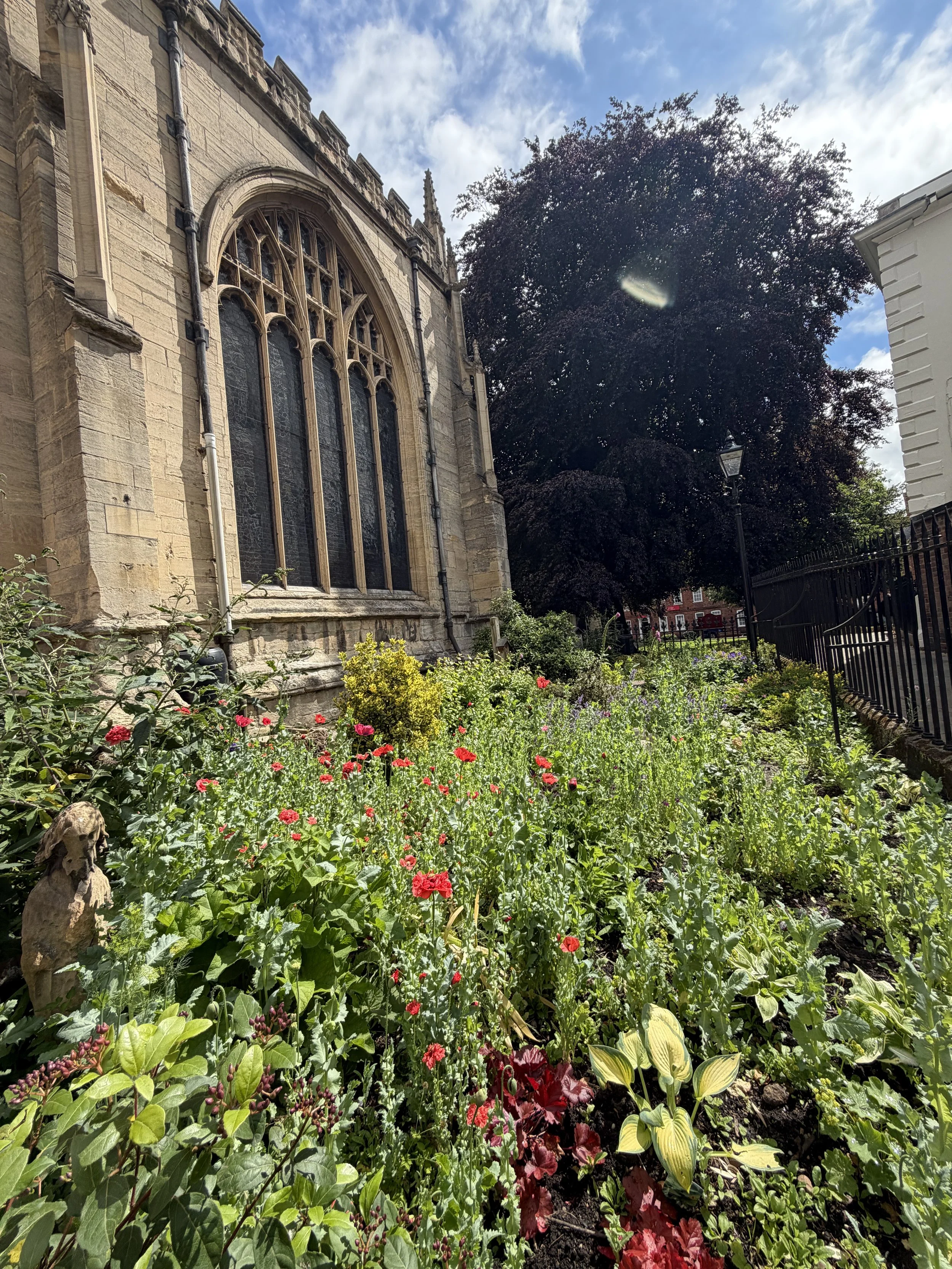
Vestry Garden “Grown not flown”
This garden struggled with having the hoarding boards placed on top of the plants during construction. Some of the shrubs we are working on “teasing” them to be more upright as we don’t want to lose them!
We have planted many bulbs, including crocus, hyacinths, daffodils and some tulips in the tubs. You will see our “bug hotels” and we have just started a mini-pond and a bird bath recycling the base of the cockerel from the spire. In addition we have added additional roses, skimmia and other foliage shrubs such as photinias. There are two different colours of buddleia which we hope will attract butterflies in the summer.
Our plan is to add plants such as lavender, peonies, hydrangeas, foxgloves and hollyhocks, plus shasta daisies, poppies and nigella - all that can be used within the church as well as attracting birds, bees and butterflies. This garden is a work in progress and is under primarily a 3 year plan as we have to see what will appear this summer and the autumn as we only got in back in February 2026.. This garden requires a lot more TLC than Kate’s Garden!