
Anglo-Saxon Newark
By Amber Wilson
During the renovation of the Church of St. Mary Magdalene, which took place from November 2024 to January 2026, a female burial was located that is suspected to be from the Anglo-Saxon period. Read on to find out more about Newark during Anglo-Saxon times and some connections to our present day church.
Where did the Angles come from?
Between the 5th and 6th centuries, the East Midlands were colonised by Angles who immigrated to England. There has been a certain level of debate about the origins of the Angles. Bede states that they came from a region between Schlei and Flensburg while Ptolemy suggested the middle Elbe. However, the most compelling source is Offa’s Saga which indicates Schleswig, Germany to be the original home of the Angles. This suggestion is substantiated by archaeological evidence of pottery and broaches which were traditionally produced in southern Schleswig but have been found in England.
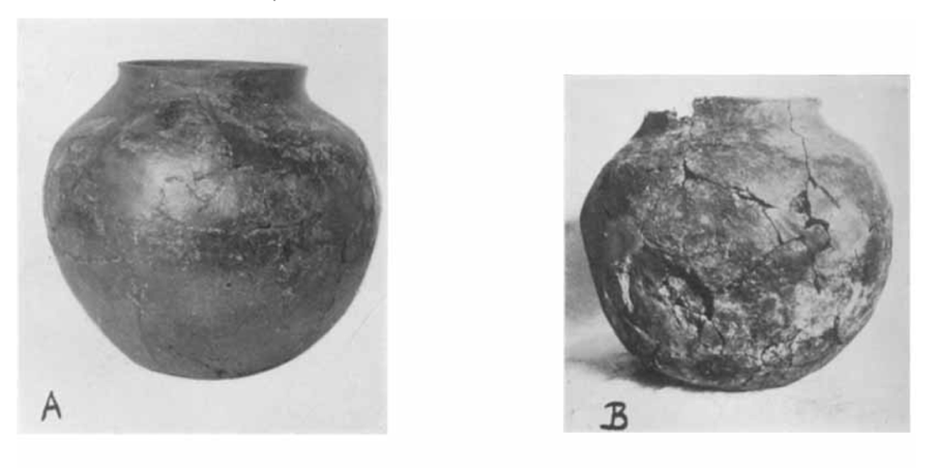
Figure 1: A Comparison of Continental and English Urns. Jankuhn, 1952:20
Anglo-Saxon pottery in Newark
This traditionally Anglian pottery has been found in Newark used as funerary urns. A 1960s excavation found an Anglo-Saxon cremation cemetery with over 300 urns. These handmade decorated pots have a clear similarity to the pottery from Northern Germany and Southern Denmark, indicating that the Angles had settled in the Midlands. The cinerary urns of Anglo-Saxon design contained cremated bones and some personal items such as bronze tweezers, scissors and bone combs. Bone Combs are commonly treated as emblematic of the Anglo-Saxon and have even been used as dating devices given their popularity and frequent occurrence.
Christianity comes to Newark
By the end of the 8th century, Britain was frequently being raided by the Danes. By 867 they were wintering in Nottinghamshire. There is evidence of the Danish invaders in Newark, suggesting this was the point at which Newark became a defended settlement.
The Christianisation of Anglo-Saxon settlements in Newark is evidenced by the burials found at Newark Castle, which were oriented east-west. Despite finding some early Saxon pottery in association with the graves, there were no grave-goods. This is indicative of early Christian burial traditions in England. Furthermore, radiocarbon dating provided a date in the late Saxon period between 950 and 1070. Given the fact that St Augustine’s mission to convert Britain began in 597 AD, this supports the idea of an early Christian settlement.
There is no evidence of a church associated with this location. However, several beam slots suggest building activity to some degree, and the parish church is located only 300 meters away. Despite the burials not being adjacent to the church, this is a common occurrence with many churches lost from the archaeological record for the later Anglo-Saxon period. Moreover, they were to a certain extent within the proximity of the St. Mary Magdalene Church, and an Anglo-Saxon burial was found in association with the church.
So what of the Anglo-Saxon burial at St Mary’s?
The remains were found in the northwestern corner of the church during recent regeneration works, buried underneath a wall which bisected the remains. This indicates that the burial predated the building of the church. Given that the church was built mainly as we see it today between 1100-1500, the body can likely be dated to the Anglo-Saxon period. This is supported by the hypothesis that an Anglo-Saxon church predated the current one, further supporting the idea of early Christian Anglo-Saxon burials in Newark.
Bibliography
Fargher, D. 2025. From Burhs to Bjarn’s Gate – Saxon Newark and Its Viking Visitors (410 AD-1066 AD). 39-44 in Newark-on-Trent: A Sometimes Witty Journey Through Time.
Hadley, D.M. 2000. Burial Practices in the Northern Danelaw, c.650-1100. Northern History. 36(2):199-216
Hadley, D.M. and Buckberry, J. 2005. Caring for the Dead in Late Anglo-Saxon England. Pastoral Care in Late Anglo-Saxon England, 6:121-47
Jankuhn, H., 1952. The continental home of the English. Antiquity, 26(101), pp.14-24.
Pask, B. M. 2000. The Story of Newark Church and its People. 18-129 in Newark Parish Church of St. Mary Magdalene. Newark-on-Trent: District Church Council of St. Mary Magdalene
