
Grandeur and Whimsy
By Abdulaziz Alhamdan
Aziz has recently completed work experience at St Mary’s as part of his degree at Nottingham Trent University. He created some KS3 school resources, which will be available to download from our website.
One of the things I enjoy most about St Mary Magdalene is just how much there is to look at.
It is easy to walk into a church like this and take in the big picture first; the height, the stained glass, the stonework, the screens and the monuments. But the more time I spend in St Mary, the more I find myself thinking about the people behind it. Generations of artists, craftspeople and workers have shaped the building, repaired it and added to it over centuries.
That inspires me in two quite different ways.
The first is the scale of the work. Some of it is simply enormous. I look at the height of the church, the amount of carved stone and timber, the glass, the decoration, and I keep thinking about how much effort all of this must have taken. Not just the artistic skill and craftsmanship, but the scale of the physical work involved in actually making and installing it.
The second is what happens when I stop looking at the whole church and start looking at the details. The choir wooden screen is a good example. From a distance, it looks very formal and ordered. The same arches, panels and carved shapes repeat across it, and the first thing I notice is the overall craftsmanship.
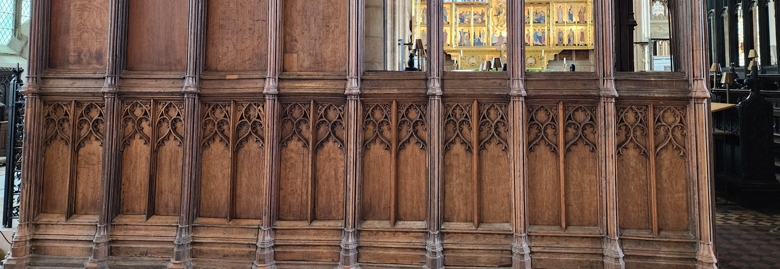
Then I get closer. Tucked into the corners of the carving are these tiny animals, birds and strange little creatures. Some are easy to recognise, while others are much harder to make sense of. One looks a little like a dragon, another has long ears, another looks like a bird, and some seem to be combinations of several things.
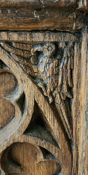
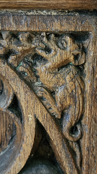
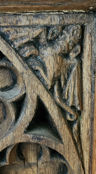
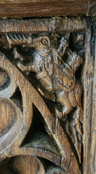
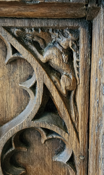
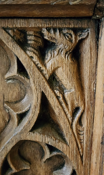
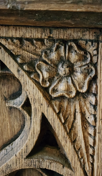
Whoever was carving them could have repeated the same design over and over again. It would probably have been quicker. Instead, each small corner seems to have become an excuse to try something slightly different. The heads change, the wings change, the expressions change. Some look serious, some slightly odd, and a few are kind of fun.
When I first look at the screen, I see a large historic object. When I look closely, I start thinking about the individual person carving it. Someone was standing there with a piece of wood and a set of tools, working within a very strict overall design, but still finding small places where they could add a little whimsy.
That is something I keep noticing around St Mary. The building is full of repetition and structure, but the closer I look, the more variation I find.
Historic buildings are often explained through dates, architectural styles and major events, and of course those things are important. But I also like finding these much smaller traces of the people who actually made them.
For me, that is part of what makes St Mary so interesting. From a distance, I see the scale of what generations of people created. Up close, I start noticing the individuals.